-
Why USCCG

Why USCCG
We deliver measurable financial results. We work inside real production environments, not conference rooms, building stronger management operating systems that drive sustained output, cost control & accountability We combine rapid diagnostic work with hands-on implementation to improve how your operation plans, executes & follows up every day.
 Join a team that works shoulder-to-shoulder with operators and executives to solve real operational challenges on the ground.We’re Ready to ListenGot a business problem and want to kick around some ideas to solve it?
-
What We Improve
What We Improve
We improve output, reliability, quality, cost, and execution discipline. Our work strengthens the Management Operating System — the daily routines and controls that drive results. Every engagement delivers measurable financial impact. Prepare teams, systems & leadership routines to execute major outages, restarts & transitions with control.
 Reduce downtime & stabilize performance by improving planning, preventive maintenance & follow-up discipline.
 Improve material flow, inventory visibility, and supplier performance to reduce delays and strengthen operational continuity.
-
Industries
Industries
We work with production-driven organizations that make, move or maintain physical products. In complex operations, throughput, uptime & cost control directly impact financial performance. While industries differ, disciplined execution & strong management systems are universal. Improve throughput, equipment reliability & cost control in high-variability, asset-intensive environments.
 Increase output, stabilize processes & improve supervisory follow-up across discrete & process manufacturing.
 Accelerate value creation by stabilizing operations, improving EBITDA drivers & building sustainable leadership systems.
 Strengthen line performance, quality control & production scheduling in fast-moving consumer operations.
-
Insights
Insights
Our insights reflect decades of on-the-ground operational work. We share practical perspectives on management operating systems, execution discipline, reliability, and productivity improvement. Every article is rooted in real-world application, not theory.Featured insightStrategies for Meeting Increasing Customer DemandIf you have noticed or, in many cases, been run over by dramatically increasing customer demand for your products, you’re not alone.


-
Why USCCG
Why USCCG
We deliver measurable financial results. We work inside real production environments, not conference rooms, building stronger management operating systems that drive sustained output, cost control & accountability
We combine rapid diagnostic work with hands-on implementation to improve how your operation plans, executes & follows up every day.
Join a team that works shoulder-to-shoulder with operators and executives to solve real operational challenges on the ground.We’re Ready to ListenGot a business problem and want to kick around some ideas to solve it? -
What We Improve
What We Improve
We improve output, reliability, quality, cost, and execution discipline. Our work strengthens the Management Operating System — the daily routines and controls that drive results. Every engagement delivers measurable financial impact.
Prepare teams, systems & leadership routines to execute major outages, restarts & transitions with control.
Reduce downtime & stabilize performance by improving planning, preventive maintenance & follow-up discipline.
Improve material flow, inventory visibility, and supplier performance to reduce delays and strengthen operational continuity. -
Industries
Industries
We work with production-driven organizations that make, move or maintain physical products. In complex operations, throughput, uptime & cost control directly impact financial performance. While industries differ, disciplined execution & strong management systems are universal.
Improve throughput, equipment reliability & cost control in high-variability, asset-intensive environments.
Increase output, stabilize processes & improve supervisory follow-up across discrete & process manufacturing.
Accelerate value creation by stabilizing operations, improving EBITDA drivers & building sustainable leadership systems.
Strengthen line performance, quality control & production scheduling in fast-moving consumer operations. -
Insights
Insights
Our insights reflect decades of on-the-ground operational work. We share practical perspectives on management operating systems, execution discipline, reliability, and productivity improvement. Every article is rooted in real-world application, not theory.Featured insightStrategies for Meeting Increasing Customer DemandIf you have noticed or, in many cases, been run over by dramatically increasing customer demand for your products, you’re not alone.
The Client
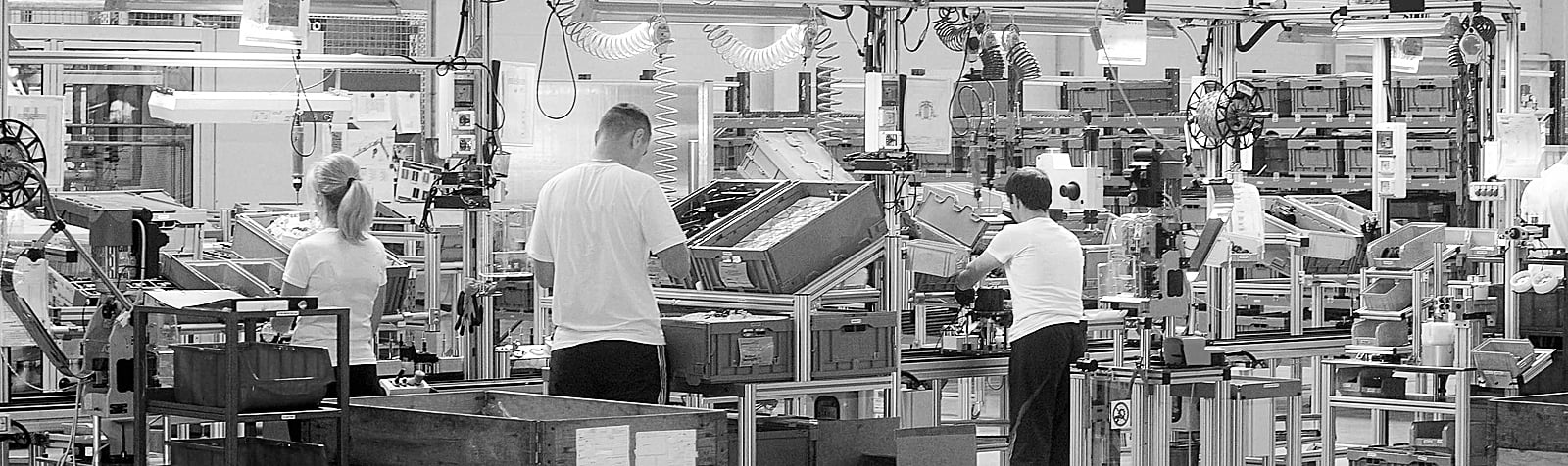
A leading full-service systems integrator and original equipment manufacturer (OEM) whose business is designing, manufacturing, and integrating electrical and process control systems for water, wastewater, transportation, lighting, and renewable energy applications across the United States.
The Challenge
The company was behind schedule with no plan as to when they were going to make delivery to their customers. Their reputation was tarnished, customers were charging for lateness, cancelling orders, and costs were out of control. This was not a simple project.
Some of the contributing factors that created this challenge included:
Material Overruns. As part of being acquired by a private equity firm, the original owner sold far beyond the company’s capacity to produce in what can be up to a 24-month lead time. Their order fulfillment process directs the purchase of parts up to 18 months before actual production begins. The warehouse operated on outdated processes and spreadsheets and could not manage the influx of parts. Numerous parts were lost but not realized as such until the start of production 18 months later. Some of these lost parts are highly specialized with extended lead times that could then further postpone production. The reorder of parts was crushing the budget and causing severe downstream effects.
Labor Overruns. Production had no choice but to start orders they did not have all the parts for. As a result, excessive WIP would sit, and various employees would work on the same order over time as reordered parts arrived. Without standard processes in place, each employee would rework to meet what they thought the work should look like, resulting in significant labor overruns.
Lack of a Robust Management Operating System (MOS). There was little to no capture of data for analysis or review, let alone to enable continuous improvement efforts. Even if data was being captured, there were no standards to measure it against.


Conclusion
The success of this project came from the passionate determination of the client and the courage they found to be bold while partnering with USC Consulting Group.
Now that this client knows where its parts are (Warehouse Management System), has an efficient and continuously improving process to manufacture its assemblies (Single Piece Flow), and the sustainable continuity of a fully functioning Management Operating System (MOS), they hold the keys to continue reducing material and labor overruns and have developed an internal capacity to sustain these improvements for years to come.
To find your courage to create bold, successful, sustainable change, contact USC Consulting Group today!
USCCG At Work:
Featured Client Results

Manufacturer Breaks Constraints to Double its Throughput