

You rolled out a process improvement initiative at your chemical plant. The first few months looked great. Throughput numbers climbed, waste dropped, and your team was energized. Then six months later, old habits crept back in.
If that pattern sounds familiar, you're not alone. Sustaining process improvement in chemical manufacturing is one of the hardest operational challenges plant leaders face.
This guide walks you through why improvement efforts stall in chemical operations and what you can do to make your gains permanent. You'll find practical frameworks, step-by-step methods, and real-world approaches that go beyond theory.
Key Takeaways: Lasting Chemical Plant Gains in 2026
- Most chemical plant improvement initiatives lose momentum because sustainment systems are never built into the original plan.
- Leadership visibility on the plant floor is the single most reliable predictor of whether gains hold over time.
- Standard work documentation and daily management routines create the structure that locks in improved performance.
- USC Consulting Group helps chemical operations teams build sustainment disciplines that keep improvement gains from slipping backward.
- Frontline employee involvement during and after an improvement project is what separates lasting change from temporary spikes.
Why Process Improvement Gains Fade in Chemical Plants
Chemical operations run around the clock. Shift changes, equipment handoffs, and rotating crews make it easy for new methods to get lost in the daily grind. A procedure that works on day shift may get skipped entirely on nights.
The deeper issue is that many improvement projects focus entirely on achieving the initial result. The project team hits its target number, the consultants leave, and nobody owns what happens next. There's no mechanism for holding the new standard in place.
Another common factor is initiative fatigue. When your plant launches multiple improvement projects at once, each competes for attention and resources. Teams lose clarity about which changes matter most, and the result is partial adoption across the board.
What Makes Chemical Manufacturing Uniquely Difficult for Sustainment?
Chemical plants differ from discrete manufacturing in ways that make holding onto gains harder. Your processes are often temperature-sensitive, pressure-dependent, and time-critical. Small deviations in any variable can cascade into bigger problems downstream.
Regulatory requirements add another layer. Environmental compliance, safety protocols, and hazardous material handling create constraints that limit how quickly you can adjust processes. Changes that work in a pilot run may need additional validation before full deployment.
Workforce turnover and an aging operator population also play a role. When experienced operators retire, they take institutional knowledge with them. If improved methods aren't documented and trained into the next generation, those gains walk out the door.
How to Assess Whether Your Improvement Gains Are at Risk
Before you can fix a sustainment problem, you need to know if you have one. Start by asking a few direct questions about your current operations.
Are Your Key Performance Metrics Trending Backward?
Pull your throughput, yield, and downtime data for the last 12 months. If the numbers peaked shortly after a project closed and have been drifting since, that's your signal. A flat or declining trend after an improvement event tells you the new methods aren't sticking.
Can Your Operators Describe the Standard Work?
Walk the floor and ask your frontline operators to explain the current standard for a recently improved process. If you get different answers from different people, your standard work documentation either doesn't exist or isn't being followed.
Is Anyone Auditing the Improvements?
If no one is checking whether new procedures are followed, they won't be for long. Accountability gaps are the most common reason chemical plant improvements erode. Without regular verification, even well-intentioned teams default to familiar routines.
Step-by-Step Framework for Sustaining Gains in Chemical Operations
Sustaining improvement isn't a separate project. It's a discipline you build into how your plant operates every day. Here's a practical framework.
Step 1: Define the New Standard Before the Project Ends
Every improvement project should produce a documented standard. This includes the revised procedure, the target metrics, and the roles responsible for maintaining performance. Write it down before the project team disbands.
Too many chemical plants treat documentation as an afterthought. The standard should be specific enough that a new operator can follow it without guessing. Visual aids, checklists, and control limits all belong in this package.
Step 2: Build a Daily Management System Around the Gains
Daily huddles at the shift level keep improved performance visible. These are short, focused meetings where supervisors review yesterday's numbers, flag deviations from the standard, and assign corrective actions.
According to a 2026 IMEC report on sustaining CI in manufacturing, daily huddles are the single most effective sustainment practice because they make performance gaps impossible to ignore.
Step 3: Assign Ownership at the Supervisory Level
Someone on the plant floor has to own each improvement. Not the plant manager, not a corporate sponsor. The shift supervisor or area lead who lives closest to the work should be the one accountable for maintaining the standard.
When ownership sits too high in the organization, the distance between the accountable person and the actual work creates blind spots. Supervisors see the day-to-day reality and can respond to drift before it becomes a full backslide.
Step 4: Schedule Regular Audits of Improved Processes
Audits don't need to be elaborate. A structured walk-through of the process area, comparing what's happening against the documented standard, is enough. Weekly audits for the first 90 days after a project closes are a reasonable starting cadence.
After the first quarter, you can shift to monthly audits if performance is stable. The point is to keep a routine check in place so deviations get caught early. Waiting for a KPI to drop before investigating means you've already lost ground.
Step 5: Close the Loop with Frontline Feedback
Your operators know when a new process is drifting before the data shows it. Create a mechanism for them to flag issues directly. This could be a standing agenda item in your daily huddle or a simple visual board in the work area.
When frontline workers see that their input leads to action, they become invested in sustaining the change. When their concerns go unanswered, they stop raising them and quietly revert to old methods.
The Role of Leadership in Locking In Chemical Plant Improvements
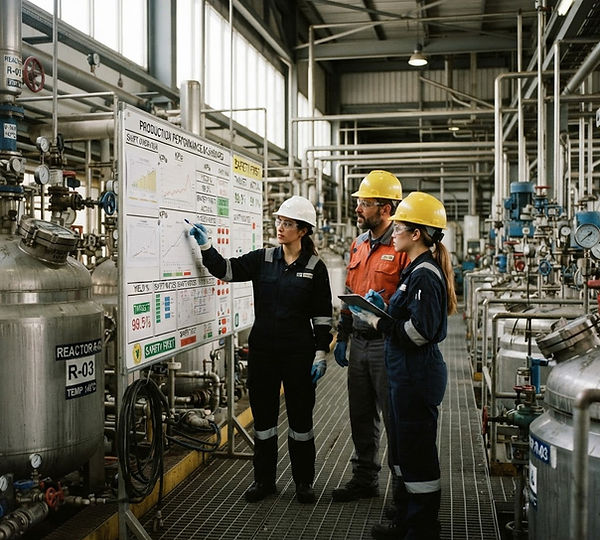
Leadership visibility on the plant floor does more for sustainment than any dashboard or report. When operators see their plant manager walking the line and asking about the new process, it sends a clear message about what matters.
Why Gemba Walks Matter for Chemical Operations Leaders
A Gemba walk isn't a tour. It's a structured visit to the place where work happens, with the specific purpose of observing, asking questions, and reinforcing the standard. Leaders who do this regularly build credibility with their crews and catch problems early.
USC Consulting Group encourages executives to spend time with the people closest to the work. The frontline operators on your chemical processing lines hold a wealth of knowledge about what's working and what's breaking down. Listening to them is how you stay connected to reality.
How Leader Standard Work Reinforces Improvement Gains
Leader standard work is a defined routine for supervisors and managers that includes specific improvement-related tasks. It might include reviewing a daily metric board, conducting one Gemba walk per shift, or verifying that a recently improved process is running to spec.
Without this structure, leaders default to firefighting. They spend their days reacting to the loudest problem rather than maintaining the systems that prevent problems in the first place. That reactionary pattern is what allows lean manufacturing gains to slip.
How to Build Knowledge Transfer Into Your Improvement Process
In chemical plants, the knowledge gap between a retiring operator and a new hire can represent decades of accumulated process understanding. If your improvement gains depend on a handful of experienced people doing things the right way, those gains are fragile.
Document Tribal Knowledge Before It Walks Out the Door
Every chemical plant has operators who know the "feel" of a reactor or the sound a pump makes before it fails. That kind of knowledge rarely makes it into a procedure manual. Make it a deliberate practice to capture these insights during every improvement project.
USC Consulting Group helps teams preserve tribal knowledge by building structured knowledge transfer into the project itself, not as an afterthought.
Pair Experienced Operators with New Hires on Improved Processes
Mentoring works, but it requires careful framing. Be clear that the purpose is to transfer valuable knowledge, not to signal that the experienced worker is being replaced.
Frame the conversation around how much the organization values what that person knows. Emphasizing respect for their expertise sets the right tone for the partnership.
Done well, mentoring on improved processes gives the new hire a faster path to competence and gives the experienced operator a respected role in the change. Done poorly, it creates resentment. The framing matters.
Common Barriers to Sustaining Improvement in Chemical Manufacturing
Even with the right framework, certain organizational patterns will undermine your sustainment efforts. Recognizing them early gives you a chance to address them before they derail your progress.
Barrier 1: No Clear Connection Between Improvements and Business Goals
When operators don't understand why a change was made, they have no reason to maintain it. Every improvement should be tied to a specific business outcome the team can see and measure.
"We changed this procedure to reduce off-spec product by 8%" is a reason people can rally behind. "Management told us to" is not.
Barrier 2: Supervisors Who Were Not Involved in the Improvement
If the people responsible for daily execution weren't part of the improvement project, they have no ownership of the result. They may even resent the changes imposed on their area.
Involving frontline employees and their supervisors from the start isn't optional. It's the difference between a change that sticks and one that fades.
Barrier 3: Initiative Overload and Competing Priorities
Chemical plants often run multiple improvement projects at the same time. When your operators are being pulled in three different directions, none of the changes get the attention they need. Be deliberate about limiting work-in-progress and closing one initiative fully before launching the next. Focusing your supply chain and floor-level teams on fewer targets at a time drives better adoption.
Barrier 4: Metrics That Stop Being Tracked After the Project Closes
If you stop measuring a KPI after the improvement project is complete, you've sent a signal that the result no longer matters. Keep the metric visible on your daily management boards. Trends that move in the wrong direction should trigger a defined response.
How USC Consulting Group Helps Chemical Plants Sustain Gains
USC Consulting Group takes a hands-on approach to process improvement that prioritizes sustainment from day one. The firm works alongside your team at the point of execution, not from a conference room offsite.
That means building the daily management systems, standard work documentation, and change management practices that keep gains in place long after the project wraps.
With more than 55 years of experience in industrial operations, USC Consulting Group understands the specific challenges chemical operations leaders face. The firm's employee involvement approach brings your frontline workers into the improvement process, giving them ownership of the result and a reason to maintain it.
Measuring the Long-Term Impact of Sustained Process Improvements
Sustained improvements compound over time. A 5% yield increase that holds for three years is worth far more than a 15% spike that fades after six months. To capture this value, you need to track the right metrics over the right timeframe.
Which Metrics to Track for Chemical Plant Sustainment
Focus on the metrics that directly reflect the improvement you made. If the project targeted throughput, track throughput. If it targeted waste reduction, track waste. Avoid the temptation to roll everything into a single composite score that obscures what's really happening.
Pair your primary metric with a process compliance metric. For example, track both your yield number and the percentage of shifts where standard work was followed. If compliance drops before yield does, you have an early warning that gains are at risk.
How to Set Realistic Sustainment Timelines
Improvement projects often set aggressive targets for the initial gain but say nothing about how long those gains should last. Set an explicit sustainment horizon of at least twelve months for chemical operations.
If the improved performance holds for a full year, you can be reasonably confident the change has been embedded into daily operations.
Advanced Strategies for Embedding Improvement Into Chemical Plant Culture
Once you've mastered the basics of sustainment, you can move toward building a culture where operational improvement is a standing part of how your plant runs, not a special event.
Tie Improvement Sustainment to Performance Reviews
If maintaining improved performance is part of a supervisor's evaluation criteria, it gets attention. This doesn't mean punishing people for backsliding.
It means recognizing and rewarding the leadership behaviors that keep gains alive. Conducting regular audits, responding to deviations, and coaching operators on the standard all qualify.
Create a Visible Improvement Scorecard for the Plant
A plant-level scorecard that shows the status of every recent improvement project creates accountability and transparency. Post it where everyone can see it. When gains start to slide, the scorecard makes the problem visible before it becomes a crisis.
USC Consulting Group's approach to cost and inventory control includes building these kinds of visual management systems into your operations.
Develop Internal Improvement Champions
You don't need external consultants for every improvement project. Identify high-potential operators and supervisors who can be trained in improvement methodologies. Give them the skills to lead small events and sustain the results.
Over time, these internal champions become the backbone of your plant's improvement culture.
In Conclusion: How to Make Chemical Plant Gains Stick for Good
Sustaining improvement in a chemical plant isn't about willpower or motivation. It's about building the systems that make the improved way of working the default. Standard work, daily management, leadership presence on the floor, and frontline ownership are the disciplines that turn temporary results into permanent performance.
Every chemical operations leader has seen gains fade. The good news is that the pattern is preventable. Start with a clear standard, assign ownership close to the work, and audit regularly.
Listen to the people doing the job. That's how you make your operational excellence efforts pay off for years, not just months.
FAQs About Sustaining Process Improvement in Chemical Plants
Why do most process improvement gains fade in chemical plants?
Gains fade because sustainment systems are never built into the original project plan. Without daily management routines, standard work documentation, and regular audits, teams naturally revert to familiar habits once the project team moves on.
How long should you track metrics after a chemical plant improvement project?
Track your key performance metrics for at least 12 months after project close. A full year of stable performance is a reasonable indicator that the new standard has become part of daily operations rather than a temporary spike.
What role does leadership play in sustaining chemical plant improvements?
Leadership visibility on the plant floor is the most reliable predictor of sustained gains. USC Consulting Group recommends that leaders conduct regular Gemba walks and follow defined leader standard work routines to reinforce improved performance.
How can you prevent knowledge loss when experienced operators retire?
Build structured knowledge transfer into every improvement project. USC Consulting Group helps teams capture tribal knowledge and pair experienced operators with new hires so critical process understanding doesn't leave with the retiring workforce.
What is the first step to improve sustainment at a chemical plant?
Start with daily shift huddles. These short meetings review yesterday's performance metrics and flag deviations from the standard. USC Consulting Group builds daily management systems into every engagement to keep improved performance visible and actionable.