
Case study · Automotive
Truck body maker more than doubles weekly output, from 11 units to 24
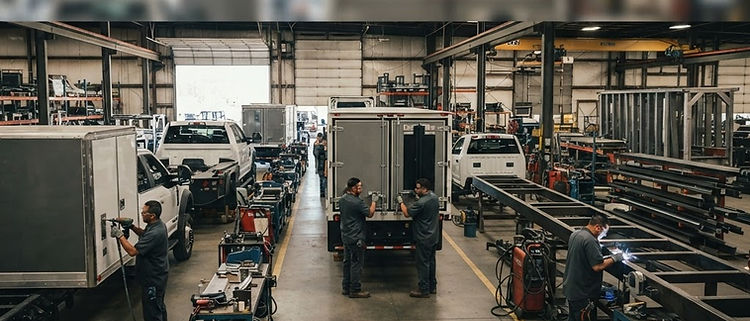
A U.S. trailer and truck body leader wanted to grow its truck body share and weigh a new plant, but shared operations with its trailer business caused delays and rework. USC rebuilt flow, scheduling and leadership routines.
Results
118%
increase in invoiceable units a week, from 11 to 24
71%
reduction in online work in process (WIP), from 131 units to 38
Hours per invoiceable unit also fell.
The situation
The company wanted to grow its truck body market share and explore a new facility, but its truck body operation suffered material delays, unstable schedules and rework.
What the assessment found
- Subassemblies built in the trailer building across the lot, delaying truck bodies
- Quality defects from incomplete standard work and a rushed pace
- No accurate baseline to support a market-share decision
How the work was done
Flow: pull with heijunka
Set up heijunka boards across subassemblies to align daily goals and create a traceable pull system.
118%
increase in invoiceable units a week
Materials: track readiness
Built an area readiness tracker linking outside vendors, internal fabrication, material handling and supervisors, shown on shop floor boards.
71%
reduction in online WIP
Leadership: one standard agenda
Created a standard leadership meeting agenda covering parts, units and labor together, flagging risks before they hit results.
83%
compliance in management operating system audits
Before and after
Invoiceable units a week
+118%
Online WIP units
−71%
Weekly invoiceable units and online WIP units.
Lasting impact
The plant held a steady rate of 24 units a week with far less WIP, giving the company a reliable baseline for its growth plans.