
Case study · Food & Beverage
Midwest food distributor saves $2.3M a year in yield by controlling beef giveaway
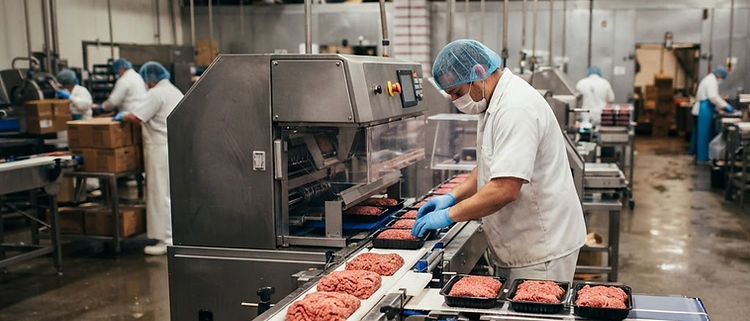
A shift from restaurant to supermarket demand left a third-generation food distributor giving away more than 1.5 million pounds of ground beef a year. USC, back 15 years after a first project, installed a management operating system run by the numbers.
Results
$2.3M
in yearly yield savings
23%
improvement in labor, companywide
Yield savings are per year.
The situation
When the pandemic shut restaurants, the distributor's demand swung from small, higher-margin foodservice batches to high-volume supermarket orders, and yield suffered: grinding 200,000 pounds of ground beef a day, it was giving away more than 1.5 million pounds a year to stay above label weight.
What the assessment found
- Packages run above label weight as a safety margin
- Operating procedures too rigid to adapt to the market shift
- Floor not run by the numbers
How the work was done
Floor: manage by the numbers
Installed a process monitor as a shared scoreboard for associates, supervisors and managers, with downtime monitoring, daily schedule control, quick-action logs and statistical process control.
Giveaway: control package weight
Integrated the scales and set upper and lower weight limits from process variability, keeping packages within the USDA's maximum allowable variance without overfilling.
$2.3M
in yearly yield savings
Scheduling: sequence and lock the day
Built fully sequenced schedules to limit changeovers, and a production coordination meeting that locks the schedule each day.
Governance: make the gains stick
Formalized meeting agendas and action items, captured improvement ideas from the floor, and audited tool use to sustain the changes.
“The Process Monitor and Daily Schedule Control have helped us to see the numbers happening every hour on the floor to communicate how we're doing back to our associates.”
Lasting impact
The distributor moved to running its floor by hourly numbers, with locked schedules, structured meetings and audits to keep the new routines in place. It recovered $2.3 million a year in yield while adapting to a supermarket-heavy market.
Related case studies
Food & Beverage
Food manufacturer reaches $16M in annualized benefits in half the planned time
$16Min annualized benefits, against a $3.5M target
Read the case study →Food & Beverage
Aquafeed producer saves $19.2M a year by taking warehouse operations in-house
$19.2Min annualized savings from warehousing and inventory control
Read the case study →Food & Beverage
Dessert manufacturer adds capacity and cuts $3M in annual cost without new capital
$3Min annualized savings from throughput, yield, labor and sourcing
Read the case study →