
Case study · Mining & Metals
Copper smelter raises blister copper output 25% with a shared daily schedule
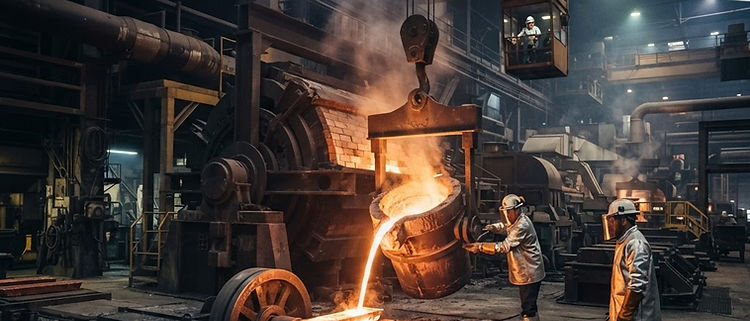
A copper smelter couldn't reach its daily blister copper target, and molten copper cooled in the aisle between its two plants. USC built a formal schedule with plant managers and coordinated the two control rooms.
Results
25%
increase in blister copper
139 tons
increase in copper smelted a day
27,000 tons
reduction in reverts
The reverts reduction was measured after 11 months.
The situation
The smelter had to produce a set amount of blister copper each day but rarely did. On a good day it made five charges, about 20 bars, from about 15 ladles; six charges stayed out of reach.
What the assessment found
- No formal production schedule
- Molten copper cooling and hardening in the aisle
- Two plants coordinated from separate control rooms
How the work was done
Schedule: define a perfect day
Brought managers together to set how long each production stage should take, then built a formal schedule with start times and durations.
Coordination: connect the plants
Improved ladle movement and communication between the furnace and converter control rooms so copper spent less time in the aisle.
27,000 tons
reduction in reverts in 11 months
Discipline: follow the schedule
Worked with managers to follow the schedule diligently; the smelter reached six charges a day and sometimes seven.
25%
increase in blister copper
Lasting impact
The smelter built on the base schedule, attacking idle time and aisle delays, and adopted a continuous improvement mindset.
Related case studies
Mining & Metals
South American gold mine realizes $1.2M+ a year with employee-led improvement
$1.2M+in annual savings realized
Read the case study →Mining & Metals
Specialty alloy maker adds $1.7M to gross margin and lifts equipment effectiveness 11%
$1.7Madded to gross margin
Read the case study →Mining & Metals
Steel mill delivers $35M in improvements with a new casting strategy
$35Min implemented improvements
Read the case study →